Scuba Diving in South Tenerife and Best Dive Sites
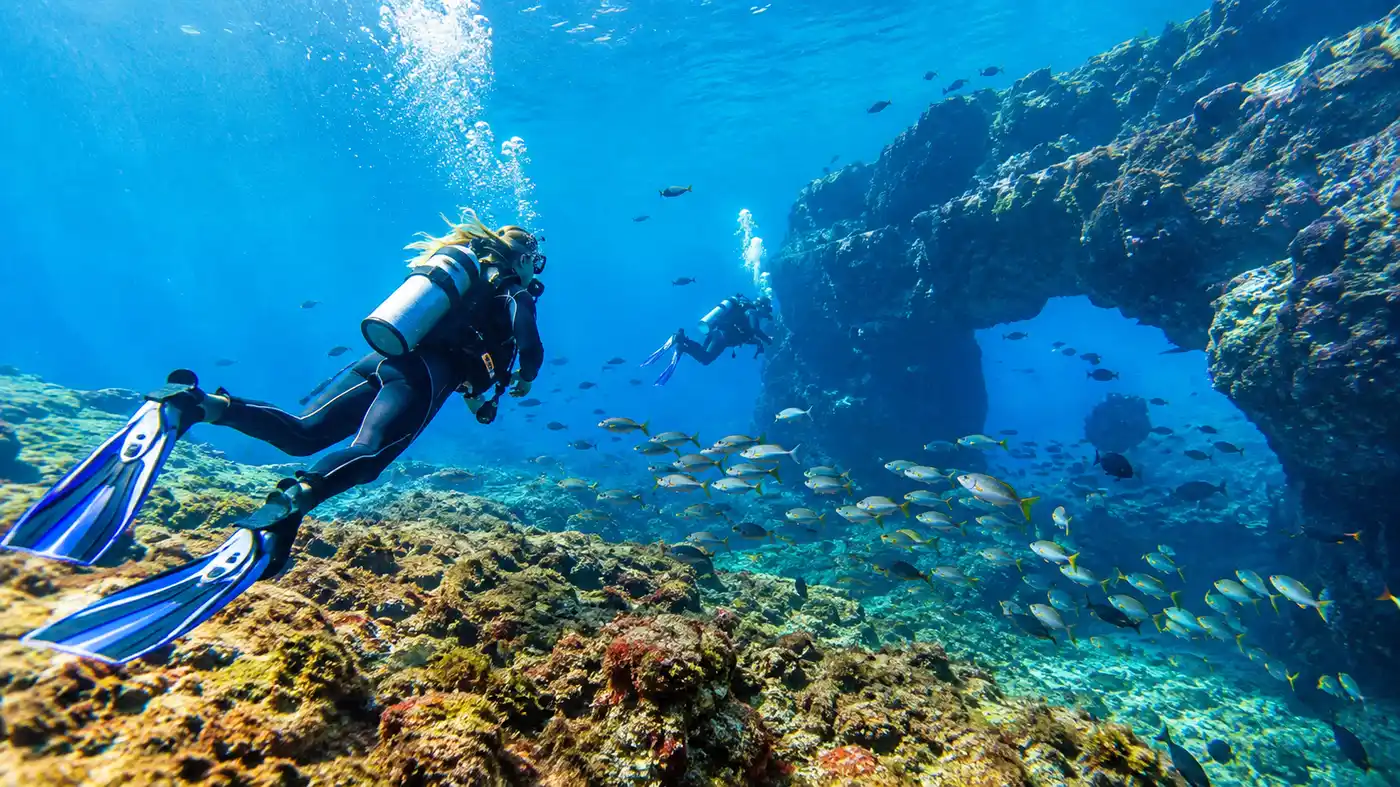
The Atlantic around the Canary Islands feels different the second your head slips under the surface. It is not the technicolor coral garden of the Red Sea or Southeast Asia, and expecting that will only leave you disappointed. Instead, scuba diving tenerife south reveals a moody, dramatic world carved out of ancient basalt lava flows, giant underwater drop-offs, and volcanic caves where massive stingrays hover like slow-moving gliders across black sand plains.
Down along the southern tip of the island, the high volcanic peak of Mount Teide blocks the northeast trade winds. Because of that natural wall, the sea down here stays remarkably calm through most of the year. Whether you base yourself near the bustling strip of Playa de las Américas or in a quieter village like Las Galletas, the south holds the densest cluster of dive centers, easy boat departures, and accessible shore entries on the entire island.
Book your scuba diving tenerife experience:
Why South Tenerife Dominates the Island Diving Scene
If you talk to divers who stayed up north around Puerto de la Cruz, you will hear stories about wild, jagged seas and dives scrubbed due to Atlantic swell. While scuba diving tenerife puerto de la cruz offers incredible caverns like the famous Cathedral, you might spend half your holiday stuck onshore waiting for wind and waves to drop. The south is a different beast altogether. Sheltered bays and south-facing coastlines keep water entry smooth almost 300 days a year.
Most daily dive operations center around three main resort towns. You will find endless shops offering scuba diving costa adeje tenerife, alongside busy launch points for scuba diving tenerife playa de las americas and Puerto Colón harbor. Just five minutes down the highway, scuba diving tenerife los cristianos gives you immediate boat access to the steep walls of Palm-Mar. The towns blend into each other anyway, so staying in one and diving out of another takes maybe 10 minutes in a cab.
The southern marine ecosystem is genuinely rich. You are dropping into water warmed by the Gulf Stream, sitting comfortably between 19°C in late winter and roughly 24°C by early autumn. Because the shelf drops quickly into deep ocean trenches between Tenerife and La Gomera, pelagic species drift right along the coastline. You might share a safety stop with an curious loggerhead turtle or catch a glimpse of an angel shark half-buried in the sand during the winter months.
Note: Ocean currents in the south can pick up fast near open headlands like Punta de Rasca. Always listen closely to dive briefings about turn-around tank pressures, especially on deeper drift sites.
The Best Scuba Diving Tenerife South Has to Offer
Picking the best scuba diving tenerife south depends a lot on your comfort level with depth and swim-throughs. The underwater topography varies wildly across just a few miles of shoreline. Some sites are mellow sandy bays where macro life hides in rocky cracks, while others are sheer drop-offs disappearing into deep blue water.
Palm-Mar Wall remains the undisputed heavyweight for boat dives in the area. Located just past Los Cristianos, this sheer volcanic face plunges down to around 40 meters. Giant round stingrays, bull rays, and eagle rays treat the base of the wall like an underwater highway. Fish farms moored offshore used to attract even more marine megafauna, and though the farms have changed, the rays still gather in massive numbers. You drop along the volcanic shelf, watch garden eels vanish into the sand, and let the gentle current push you along while trumpetfish hunt around your fins.
For something completely different, head slightly east to Montaña Amarilla near Costa del Silencio. This site looks like an alien desert. Yellow volcanic ash cones on land continue down below the waves, forming natural basalt arches, hidden swim-throughs, and strange stepped terraces. You step straight in from the rocky shore. It is shallow, usually maxing out around 18 meters, which gives you plenty of bottom time to peek under ledges for resting roughtail stingrays and electric rays.
Wreck enthusiasts generally head to El Condesito. Sunk in 1971 after running aground with a cargo of cement bags, the ship sits in an underwater canyon roughly 20 meters deep near the Rasca lighthouse. The hull has broken apart over decades of ocean storms, but the engine room, cabin outlines, and propeller still create great swim-arounds. Hundreds of damselfish and small barracudas swarm the wreckage, while octopus make homes inside the calcified bags of dried cement scattered across the sea floor.
| Dive Site | Typical Depth | Experience Level | Entry Type | Key Highlights |
|---|---|---|---|---|
| Palm-Mar Wall | 16 - 40 m | Advanced | Boat (from Los Cristianos) | Massive stingrays, deep wall, moray eels |
| Montaña Amarilla | 12 - 18 m | All Levels | Shore entry | Basalt rock arches, stingrays, strange topography |
| El Condesito Wreck | 14 - 21 m | Open Water / Adv | Boat or long shore swim | 1970s cement wreck, barracuda, octopus |
| El Puertito Bay | 6 - 12 m | Beginner / Novice | Shore / Beach | Protected bay, sea turtles, beginner friendly |
| Black Cove (Cueva Negra) | 12 - 22 m | Intermediate | Boat | Lava tubes, cave ceilings, glassfish |
If you are relatively new to the sport, our beginner's guide to scuba diving in Tenerife lays out the full breakdown of entry-level open water qualifications, but El Puertito or Abades are the gentle entries you will probably encounter first.
Diving Hubs: Costa Adeje, Las Américas, and Los Cristianos
Choosing where to base yourself comes down to what you enjoy doing once your wetsuit is dry. The dive centers themselves are scattered across these neighboring resort strips, and almost all of them will pick you up from your hotel in the morning as part of the booking.
Going for scuba diving costa adeje puts you close to luxury resorts and Puerto Colón marina, where rigid inflatable boats (RIBs) depart constantly. It is an easy, clean hub. The dive centers here cater to a mix of certified divers and first-timers taking discovery dives in calm coves like Playa de Diego Hernández. The vibe is relaxed, professional, and very geared toward boat trips running out along the southwestern cliffs.
Right next door, scuba diving tenerife las americas has a much faster pulse. The nightlife is loud, the promenade is crowded with surf schools, and the dive outfits here keep a busy daily schedule. You will find centers tucked down quiet side streets near the beach, loading vans at 8:30 in the morning to transport tanks down to the harbour. If you want great food, cheap evening beers, and direct access to shore dives right off the town breakwaters, staying around scuba diving in tenerife playa de las americas works nicely.
A few minutes south lies Los Cristianos. It has retained slightly more Canarian harbor town character than its northern neighbors. Booking scuba diving los cristianos tenerife means you are literally steps away from the ferry port where many local dive zodiacs moor. Dives heading toward Palm-Mar or the marine reserve areas take under 8 minutes by boat from here, meaning less time bouncing over choppy waves and more time relaxing on land between tanks.
Pro tip: If you get seasick easily, skip the morning boat charters from Puerto Colón and focus on shore entries at Montaña Amarilla or Abades instead. The Atlantic swells can turn safety stops into nausea tests when boats idle above you.
Book your scuba diving tenerife experience:
Marine Encounters and Seasonal Ocean Conditions
People often ask me if best scuba diving in tenerife means seeing big animals. Honestly, yes, but you have to look down at the seabed rather than out into the open water. The variety of benthic life in the south is staggering.
Five distinct species of rays glide through these waters regularly. Common stingrays, massive round stingrays that can reach two meters across, eagle rays with patterned wings, electric marbled torpedo rays, and the oddly flattened butterfly rays. In the winter months between December and March, the water drops to its coolest point around 19°C. That is when critically endangered angel sharks move into shallow sandy bays to breed. Seeing a two-meter angel shark shake sand off its flat body and swim into the shadows is something you will remember for decades.
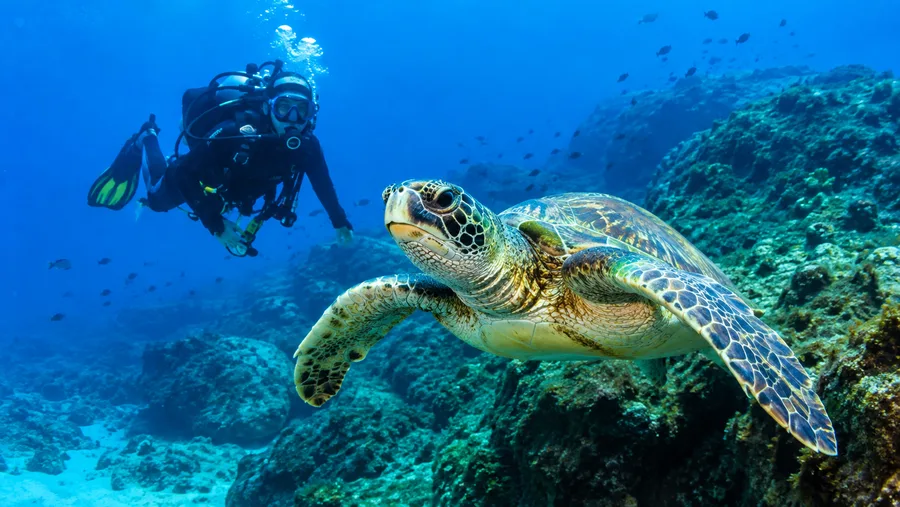
Green sea turtles still frequent bays along the Adeje coast, although the days of heavy feeding tours are thankfully over. You can also spend quiet minutes floating above rocky reefs looking at:
- Canary damsel: bright neon-blue juveniles that speckle dark volcanic cracks everywhere.
- Trumpetfish: vertical hunters that swim upside down, pretending to be harmless sea grass.
- Striped barracuda: small hunting packs circling wreck masts out in the blue.
- Canarian lobsters: spiny and slipper lobsters crammed into deep basalt chimneys.
- Tiger morays: yellow-spotted morays sharing rocky crevices with cleaner shrimp.
Visibility usually sits between 15 and 30 meters. It rarely drops below 12 meters unless heavy winter rain washes silt down the dry ravines into the sea, which happens maybe three or four times an entire winter. A good 5mm wetsuit with a hood is perfect for summer and autumn, but I definitely recommend a 7mm suit or a 5mm with an under-vest if you are diving between January and April.
Choosing a Dive Center and What to Expect
South Tenerife has dozens of dive shops. Some are massive resort factory operations running 40 discover scuba divers through a swimming pool every morning, while others are small, technical-focused outfits with two salty instructors and a single battered van. To get the best scuba diving tenerife playa de las americas experience, avoid booking generic excursions from tourist street kiosks. Go straight to a dedicated dive shop.
Ask what dive sites they actually have planned for the week. A reputable dive center in Costa Adeje or Los Cristianos plans its daily schedule around sea forecasts, tides, and diver qualifications, not just convenience. If a center promises to take Open Water beginners to Palm-Mar Wall on day one, walk away. That site requires solid buoyancy control so you don't drop past recreational limits into the blue abyss.
Costs across the south are generally quite fair compared to the Mediterranean. Expect to pay somewhere around €75 to €90 for a typical two-tank morning outing with your own gear, or roughly €95 to €115 if you need full equipment rental including computer and wetsuit. For an extensive comparison of local school rates and certifications, take a look at our guide on Tenerife scuba diving prices, schools, and packages.
- Insurance check: Spanish law strictly requires dive-specific accident insurance; good shops verify this immediately or sell day-passes for about €6.
- Medical statement: you will need to complete the standard medical questionnaire before kit touches water.
- Nitrox availability: free Nitrox is surprisingly common among quality outfits, helping extend bottom times on 25-meter reef plateaus.
- Languages spoken: because southern Tenerife welcomes people from across Europe, dive briefings are routinely handled in English, Spanish, German, or French without issue.
If you have non-diving family members or friends traveling with you, they do not need to sit by the hotel pool all day. The south has shallow volcanic reefs that offer great mask-and-fins action from shore, which you can read about in our complete guide to snorkeling in Tenerife.
Frequently Asked Questions about scuba diving tenerife south
What is the water temperature in south Tenerife throughout the year?
Water temperatures in southern Tenerife hit their lowest around February and March at roughly 19°C (66°F). By late August, September, and October, the Atlantic reaches its warmest levels, sitting between 23°C and 24°C (75°F). A 5mm wetsuit works great in late summer, but a 7mm suit is much more comfortable during winter months.
Can beginners dive at the popular sites in Costa Adeje and Las Américas?
Yes, many sites are very beginner friendly. Calm bays like El Puertito, Abades, and protected sections of Playa de las Américas provide easy shore entries without deep drops. Deeper drift sites like Palm-Mar Wall or the deeper parts of El Condesito wreck are strictly reserved for Advanced Open Water divers or those with verified deep diving experience.
Do I need to worry about strong currents when diving in South Tenerife?
Currents can pick up quickly near the southern corners of the island, especially near exposed points like Punta de Rasca. In sheltered bays around Costa Adeje, currents are usually mild to non-existent. Local dive guides monitor tidal flows closely, and boat dives are frequently planned as drift dives so you simply drift along the wall while the boat follows your surface marker buoy.
Is south Tenerife better for diving than the north?
For consistency and calm sea conditions, the south is significantly better. Mount Teide blocks the strong northeast trade winds, keeping southern waters flat when northern spots around Puerto de la Cruz are washed out by heavy Atlantic swell. The north offers dramatic rock formations, but the south guarantees far more diveable days per year.
Quick Reference
- Water temp: 19°C (winter) to 24°C (autumn)
- Average visibility: 15 to 30 meters
- Recommended suit: 5mm summer, 7mm winter
- Top marine life: Stingrays, angel sharks, turtles, morays
- Best starting hub: Los Cristianos or Costa Adeje
Book your scuba diving tenerife experience:
The Bottom Line
South Tenerife might not have coral walls bursting with rainbow sponges, but dropping down alongside a sheer volcanic ledge while massive round stingrays cruise beneath your fins is hard to beat. The conditions stay easy, the boat runs are short, and the visibility holds steady almost the entire calendar year. Book a couple of morning boat trips out of Los Cristianos, throw on a decent wetsuit, and spend a few days exploring one of the most unique volcanic underwater landscapes in the Atlantic Ocean.
Read more about scuba diving tenerife.